

How Bookshop.org used ethical e-commerce conversion rate optimisation to turn values into value
12 May 2026

Ethical e-commerce conversion rate optimisation isn’t about dark patterns, urgency hacks, or squeezing more value out of users. It’s about designing digital experiences that respect people, reinforce purpose, and still deliver commercial results.
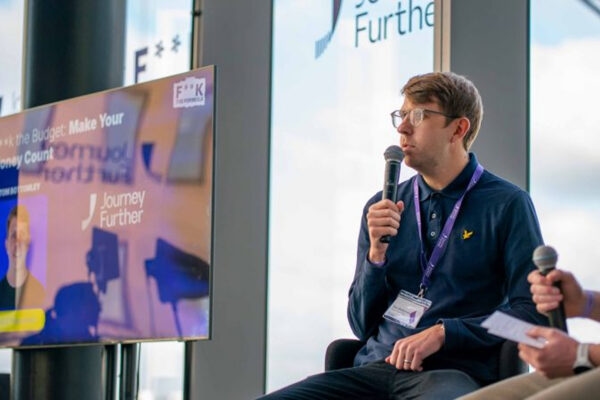
At our recent Discovered. NYC event, we brought together two people who deeply understand how brand, purpose, and conversion connect: Jon Crowder, Digital Experience Director at Journey Further, and Andy Hunter, CEO of Bookshop.org.
Bookshop.org is an ethical alternative to Amazon for book buying, designed to keep money in local communities and help small bookstores thrive online. Rather than competing on price or scale, Bookshop.org chose a different path: using ethical e-commerce conversion rate optimisation (CRO) to improve user experience, clarify its mission, and turn values into measurable value. This conversation revealed how experimentation, trust-led UX, and purpose-driven CRO can fuel long-term growth without compromising integrity.
In this fireside chat, Jon and Andy explored a powerful idea: how experimentation and a relentless focus on customer experience can unlock more than just short-term wins. It can drive long-term brand loyalty, efficient acquisition, and a better digital world.
Here’s a snapshot of how brands can troubleshoot issues with website experimentation.
You’re getting traffic. But it’s not converting.
Brands often obsess over driving traffic, but overlook what really matters: what happens when someone lands on your site. Bookshop.org had a strong proposition but wanted to really invest in their user journeys and digital experience. It was important that their consumers truly understood Bookshop’s mission of supporting local bookstores and how vital that was to society. This is where ethical e-commerce conversion rate optimisation becomes critical in helping them clearly understand the value and impact of their actions. The need to reinforce your message at every step of the funnel is clear. In collaboration with Bookshop.org, we experimented with a celebratory animation in-cart, showing how much money a purchase raised for indie stores, and conversions spiked. Playful, well-timed messaging removes friction and boosts confidence. Conversion thrives when people understand the value, not just the product.What if your mission is strong, but people don’t know it?
Even the most value-led brands can get drowned out in the scroll. 30% of new users to Bookshop.org didn’t realise it supported local bookstores, despite clear messaging. The problem? In a fast, noisy world, a single line of copy won’t cut through. Don’t be afraid to repeat yourself. Proliferate your message across every touchpoint: product pages, emails, social captions, even the checkout. Repetition builds resonance, especially with socially conscious consumers who want to know their money matters.You want to be human. But your UX says otherwise.
Sustainable CRO is about trust, not hacks or tricks. Our approach with Bookshop.org was to strip it back. Even value-led users will bounce if your site is confusing, clunky or inconsistent. Delight your users and test for that. As Jon Crowder highlighted, we often say: design to engage and delight your user, with the right experience at the right time. When users feel seen, understood and supported, they convert. For instance, every frustrating click is a reason to leave, but every helpful or joyful one is a reason to stay.Are giant competitors making it harder to cut through?
Bookshop.org exists to challenge Amazon’s dominance in the book market. Andy Hunter explains that to compete with Amazon, you give people ethical, sustainable e-commerce and a strong digital experience to match. The two are not mutually exclusive. Bookshop.org shows how ethical e-commerce conversion rate optimisation can compete with scale-led marketplaces by combining strong values with a best-in-class digital experience. The Journey Further team used the same toolkit of CRO, user research and experimentation to drive value and reinforce their mission.Instead of rejecting the tools of performance marketing, reclaim them. When used with integrity, experimentation can scale intent, strengthen brand trust, and deliver measurable returns, even on a limited budget.Short-term wins get in the way of long-term growth
Marketers are always under pressure to deliver quick, tactical results. But Bookshop.org took a long-term view and it paid off. Instead of chasing short-term conversions, the team built a brand and platform that people believe in, and that community is what sustains repeat purchase, word of mouth, and loyalty over time.It’s important to shift the conversation, don’t just optimise for quick value ahead of everything else. Instead, optimise for values, experience and community. As Jon Crowder put it: “Your user wants to feel good and our job is to help them feel as good as possible”. Ultimately, ethical e-commerce CRO aligns performance with purpose, optimising not just for clicks and checkouts, but for trust, loyalty, and long-term growth. Your audience doesn’t just want better UX or smarter ads. They want to know what you stand for, and why it matters. That’s where high-integrity experimentation comes in: not to game the funnel, but to align performance with purpose. At Journey Further, we believe the brands that win tomorrow are the ones who listen harder, test smarter, and build better experiences, from homepage to checkout.Connect with the team
Curious how ethical e-commerce conversion rate optimisation could work for your brand? Connect with our team.Related Insights
Why your site isn’t converting (and what to do about it)
Say hello to our new People Director
Why human intelligence is critical for AI to transform your business
Why traditional SEO isn’t enough anymore
Your brand’s discoverability problem starts with trust